Peru & Brazil
Some Thoughts on Ayahuasca and Other Healing Plants
The Sacred Plants
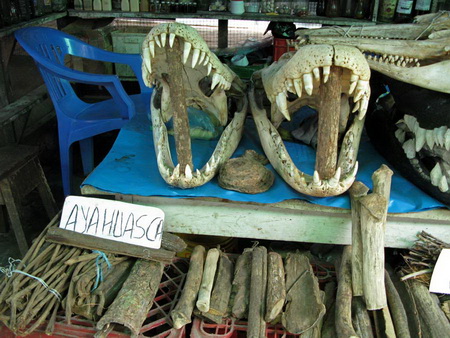
Ayahuasca, here seen in an Iquitos, Peru market, is a vine that is brewed with the leaves of another plant to make the tea called ayahuasca.
We have been blessed with many natural remedies for the physical and mental maladies that can plague humankind. Some of those remedies come from plants. Marijuana is one such plant. It has some beneficial properties in relieving pain and certain types of anxiety, but it is light years away from having anything near the healing properties of ayahuasca, peyote, iboga, or huachuma, sometimes called San Pedro.
The North American media and corporate world has succeeded in producing an epidemic of diabetes, obesity, and heart disease. It has also, at least in the USA, successfully demonized what in other parts of the world are considered sacred healing plants.
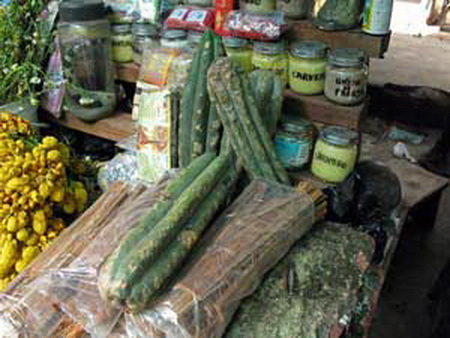
San Pedro or huachuma is a cactus that is boiled to produce a soup. It does not cause near the bodily discomfort that ayahuasca does. It also lacks many of ayahuasca's healing properties.
After most ayahuasca ceremonies my brain feels like it had just been to the dry-cleaners and come back clean, sweet-smelling, and with the wrinkles nicely ironed out. About like the way I feel after a ten-day silent and intensive Buddhist meditation retreat.
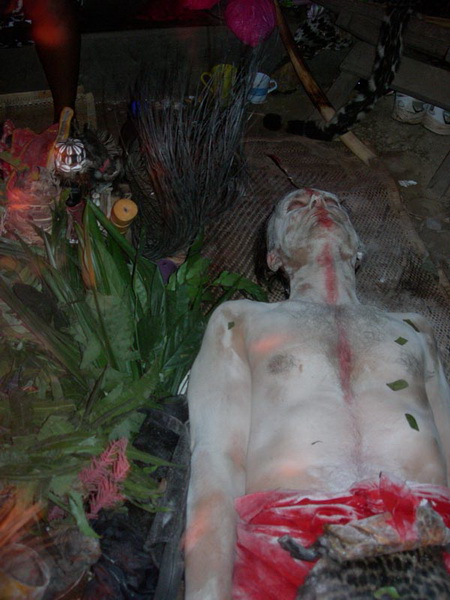
Iboga is a bush that grows in parts of Gabon and Cameroon. It can render one immobile for a few hours. Above is the author while under the influence. For more on Iboga see thomasriddle.net/gabon.
"One dose of ibogaine is equivalent to twenty years of psychotherapy. The drug is like a laser-guided smart missile for trauma."
The Retreat Center
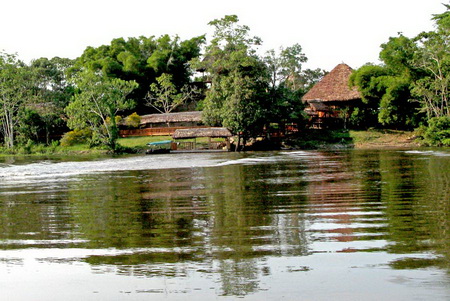
An ayahuasca retreat center on a tributary to the Amazon.
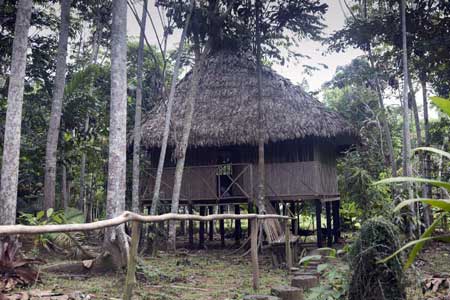
The hut I stayed in at an ayahuasca retreat center outside of Iquitos.
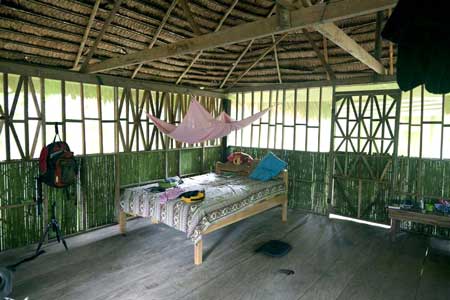
Life inside my hut wasn't too bad. Because I was surrounded by the jungle, there were lots of animals to keep me company — plenty of creepy-crawlies and flying-biting-critters, though I never saw the man-eating bats or the snakes bigger than a female mud wrestler's thigh.
The Maloca — Scene of the Crime
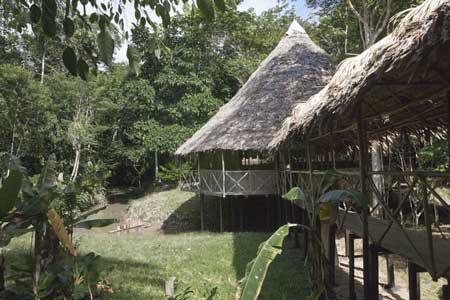
This is the scene of the crime — the maloca, or the place where ayahuasca is served. No one can count the number of times I vomited while leaning over the railing on the right.

Inside the maloca things are spacious and open. During the ceremonies, held in total darkness, the leader sits behind the table and sings ayahuasca songs, called icaros. Participants lie on thin mattresses on the floor with vomit buckets beside them.
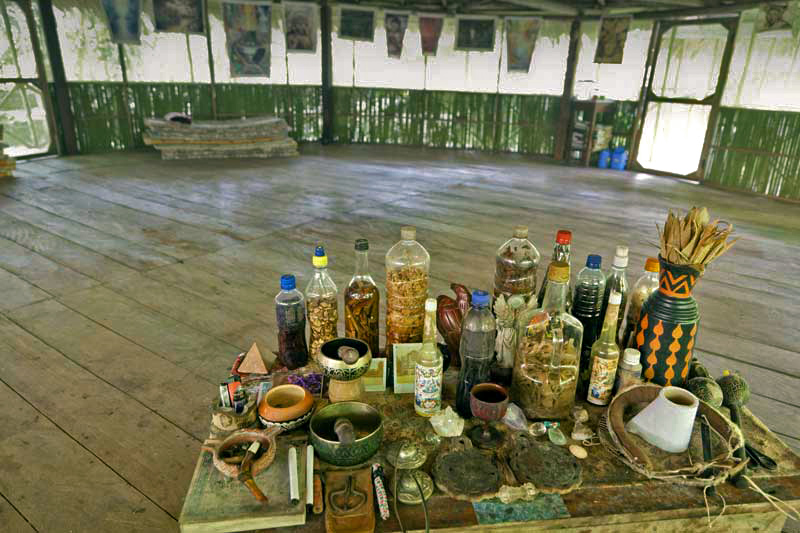
A shaman's table of herbs and trinkets inside the maloca.
Making the Brew
There are many places to drink ayahuasca in Peru and Brazil. In Brazil I have drunk with the Santo Daime Church and an offshoot of that church, Essencia Divina. In both cases I was well taken care of by sincere and knowledgeable people.
It is worth noting that in Peru ayahuasca essentially has never left the jungle, whereas in Brazil it has. In the 1930s, a Brazilian rubber tapper, Raimundo Irineu Serra, brought ayahuasca — which he mixed with some Christian practices — into the Brazilian cities. Today ayahuasca churches in Brazil have between 10,000 and 20,000 members. It seems to appeal to artists and intellectuals.
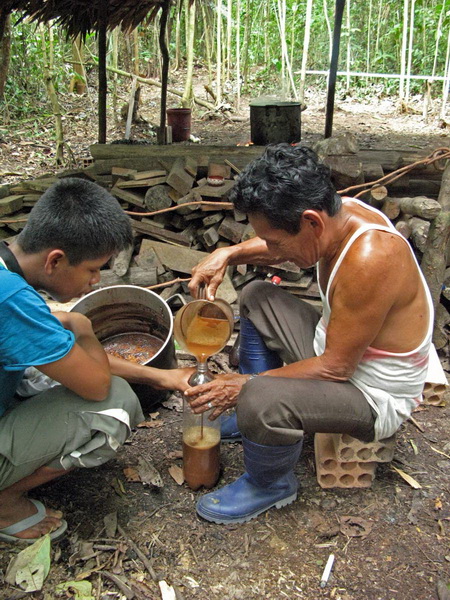
Making ayahuasca in Peru.
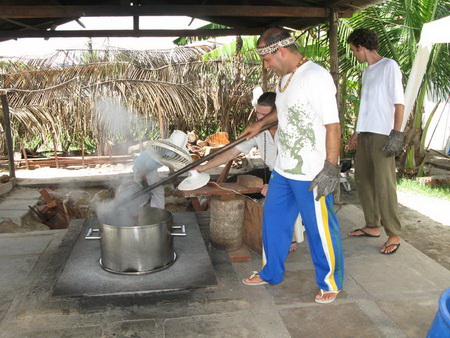
Making ayahuasca in Brazil with Essencia Divina. André, leader of the center, stirs the pot.
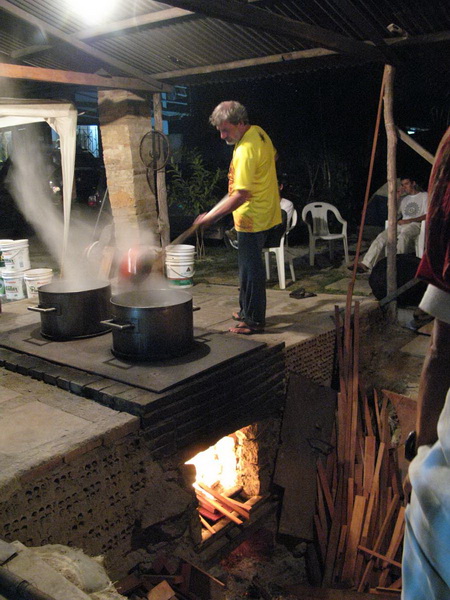
Making ayahuasca continued late into the night in Brazil.
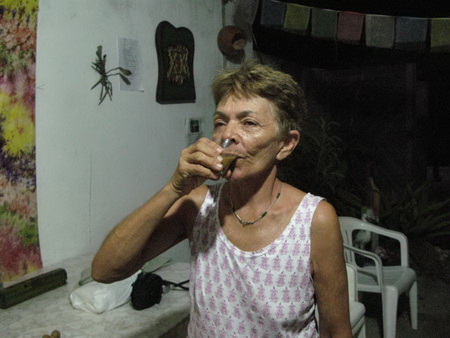
Tasting the brew. This woman, the mother of André, is a genuine connoisseur of ayahuasca.
I have also had ayahuasca with two fake shamans. One of them, a European, was as close as I've come to meeting a genuine witch — what the people in the Amazon call a bruja. She took a perverse and careless delight in over-dosing people. The other faker, another European, thought nothing of charging naïve foreigners for ayahuasca and then serving them river water. So be careful.
Here is some more advice for people who want to drink ayahuasca, which appeared in the free paper of Iquitos, Peru..
Iquitos, Peru

These ladies, who dance for locals and tourists in Iquitos, Peru, are holding a symbol of the Amazon — a boa constrictor.
My Ayahuasca Experiences — Read the Journals
-
What will happen the first time you drink? Here is what happened to me:
thomasriddle.net/brazil — January 01 -
Everyone wants a deep healing experience. Here is mine — even now, so many years later, I see January 29, 2007 as a turning point in my life:
thomasriddle.net/brazil — January 29 -
Another deeply healing experience:
thomasriddle.net/brazil — The Telephone -
What it is like to work with a fake shaman. It was not good:
thomasriddle.net/brazil — January 11